Florida Residential Eviction Process A Step by Step Guide for Landlords
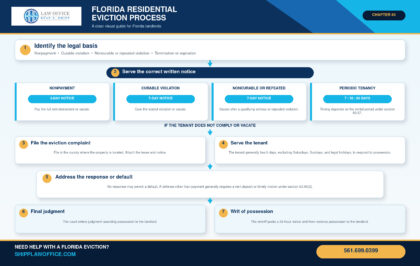
Florida residential evictions follow a defined statutory process. A landlord who skips a required notice, uses the wrong termination period, miscalculates the amount due, or files before the notice expires may lose valuable time and may have to begin again. The flowchart accompanying this article provides a practical overview of the process under Chapter 83, Part II, Florida Statutes.

Florida Eviction Process at a Glance
The usual path is: identify the legal ground, serve the correct notice, wait for the notice period to expire, file the eviction complaint in county court, complete service of process, address the tenant’s response or default, obtain a final judgment for possession, and have the sheriff execute the writ of possession. The correct path depends on the lease, the facts, the type of violation, and the relief requested.
Step 1- Identify the Legal Ground for Eviction
A Florida landlord should first determine why possession is being sought. Common grounds include nonpayment of rent, a curable lease violation, a serious or repeated noncurable violation, expiration of a fixed-term lease, or termination of a tenancy without a specific duration. The legal ground controls the notice language, timing, evidence, and allegations in the complaint.
Step 2- Serve the Correct Florida Eviction Notice
Nonpayment of Rent
For nonpayment of rent, section 83.56(3), Florida Statutes, generally requires a written three-day notice demanding payment of the rent or possession of the premises. Saturdays, Sundays, and legal holidays are excluded when calculating the three-day period. The amount demanded must be accurate and limited to amounts that may lawfully be treated as rent under the lease and applicable law.
Curable Lease Violation
When the tenant commits a lease violation that should be given an opportunity to cure, section 83.56(2)(b) generally requires a seven-day notice identifying the noncompliance and allowing the tenant to cure it. Vague descriptions create avoidable disputes. The notice should state the conduct at issue with enough specificity for the tenant and the court to understand the alleged breach.
Noncurable or Repeated Lease Violation
Certain serious violations, or a subsequent similar violation within the statutory period after a prior warning, may support a seven-day notice terminating the tenancy under section 83.56(2)(a). Because the distinction between curable and noncurable conduct is fact-sensitive, landlords should not assume that every significant lease breach supports immediate termination.
Termination of a Periodic Tenancy
Section 83.57 governs a tenancy without a specific duration. The statute presently requires at least seven days’ notice before the end of a weekly period for a week-to-week tenancy, 30 days before the end of the applicable period for month-to-month and quarter-to-quarter tenancies, and 60 days before the end of an annual period for a year-to-year tenancy. A fixed-term lease may involve different requirements based on the lease and section 83.575.
Step 3- File the Eviction Complaint in County Court
If the tenant does not comply or vacate after the notice period expires, the landlord may file an eviction action in the county where the property is located. The complaint should match the notice and should attach the controlling lease and notice. Depending on the facts, the landlord may seek possession alone or may also pursue unpaid rent, damages, attorney’s fees, and taxable costs. Combining claims can affect service and timing, so the requested relief should be considered before filing.
Step 4- Serve the Tenant
The tenant must be served with the summons and complaint. For the possession claim, the tenant generally has five days to respond after service, excluding Saturdays, Sundays, and legal holidays. Problems with service can delay the case even when the landlord’s underlying claim is strong.
Step 5- Address the Tenant’s Response or Default
If the tenant does not timely respond, the landlord may seek a default and a judgment for possession. If the tenant files a defense other than payment, section 83.60(2) generally requires the tenant to deposit accrued rent into the court registry and continue depositing rent as it becomes due, or timely file a motion asking the court to determine the amount to be deposited. Failure to comply may waive defenses other than payment and may entitle the landlord to an immediate default judgment for removal.
When the tenant files a timely answer and complies with the registry requirement, the case may proceed to a hearing, trial, or negotiated resolution. The timetable depends on service, the defenses raised, the court’s procedures, and whether the landlord also seeks damages.
Steps 6- and -7 Judgment and Writ of Possession
After the court enters a final judgment awarding possession to the landlord, the clerk issues a writ of possession to the sheriff. Under section 83.62, the sheriff posts a 24-hour notice at the premises and then restores possession to the landlord. The landlord should not change locks, remove the tenant, or take possession without completing the lawful process.
Common Mistakes That Delay a Florida Eviction
- Using the wrong notice for the alleged violation.
- Demanding an incorrect amount in a three-day notice.
- Calculating the notice period incorrectly.
- Using notice language that does not satisfy the statute.
- Failing to preserve proof of delivery or posting.
- Filing the complaint before the notice expires.
- Allowing the complaint to depart from the facts stated in the notice.
- Attempting self-help instead of obtaining and executing a writ of possession.
Florida Eviction Attorney for Landlords
Law Office of Ryan S. Shipp, PLLC represents landlords in commercial and residential eviction matters throughout Florida. Careful review at the notice stage can help prevent defects that cost more time than they save. To discuss a Florida residential eviction, call 561.699.0399 or visit shipplawoffice.com.
Statutory References
- Florida Statutes section 83.56, termination of rental agreement
- Florida Statutes section 83.57, termination of tenancy without specific term
- Florida Statutes section 83.60, defenses and rent registry procedure
- Florida Statutes section 83.62, restoration of possession to landlord
About Ryan S. Shipp, Esq.
Ryan S. Shipp is a Florida attorney whose practice includes residential and commercial evictions, unlawful detainer, ejectment, mobile home tenancies, and association possession matters. He has represented Florida landlords and property owners since 2008.
Legal Disclaimer: This page provides general information about Florida landlord-tenant law and is not legal advice. Reading this page, submitting a website form, or contacting the firm does not create an attorney-client relationship. Laws, court procedures, local requirements, lease provisions, and the facts of each matter may affect the proper course of action. Do not act or refrain from acting based solely on this information. Consult qualified Florida counsel concerning your particular matter.
Boca Raton Eviction Lawyers | Boynton Beach Eviction Lawyers | Delray Beach Eviction Lawyers | Greenacres Eviction Lawyers | Lake Worth Eviction Lawyers | Lantana Eviction Lawyers | Loxahatchee Eviction Lawyers | Palm Beach Gardens Eviction Lawyers | Palm Springs Eviction Lawyers | Riviera Beach Eviction Lawyers | Wellington Eviction Lawyers | West Palm Beach Eviction Attorneys | West Palm Beach Unlawful Detainer Lawyers | Lantana Landlord Lawyers | Landlord Attorney Lantana Florida | Landlord Lawyer Lantana Florida | Landlord Lawyer Boynton Beach Florida | Landlord Attorney Boynton Beach Florida | Landlord Attorney Lake Worth Florida | Landlord Lawyer Lake Worth Florida | Landlords Only Attorneys | Landlord Eviction Lawyers Wellington Florida | Lake Worth Beach Florida Eviction Lawyers | Eviction Lawyers Near Me | Eviction Attorneys Near Me | Florida Eviction Lawyers